Basal Implants for Severe Bone Loss – Patient Case
Full-Mouth Basal Implant Rehabilitation: Frederic's Case
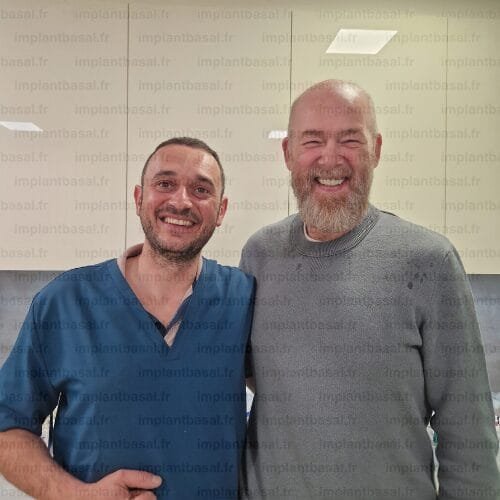
Frederic came to our clinic from France looking for a solution for advanced periodontal disease, extensive bone loss and severely compromised teeth.
After a clinical and radiographic assessment, a fixed full-mouth rehabilitation using basal implantology was planned.
This case shows how implant treatment can be approached when severe bone loss makes conventional implant treatment more complex.
- Patient: Frederic
- Treatment: Upper and lower jaw rehabilitation
- Technique: Basal implantology with digital CAD/CAM planning
- Treatment time: 7 days
- Prosthesis: Fixed full-mouth prosthesis
- Material: Metal-ceramic
- Bone grafting: Not required with basal implants
Initial Situation: Periodontal Disease and Severe Bone Loss
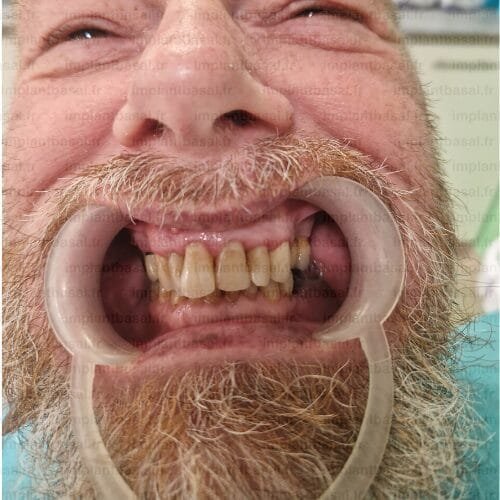
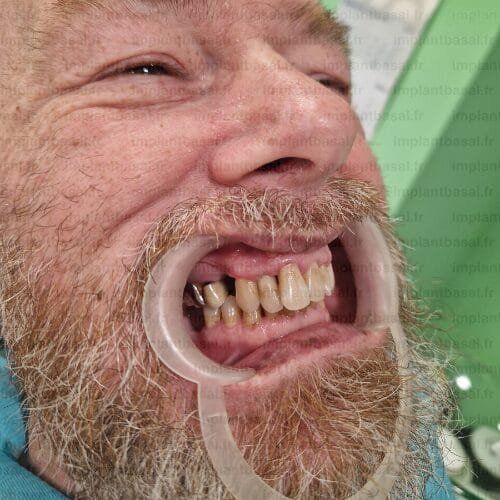
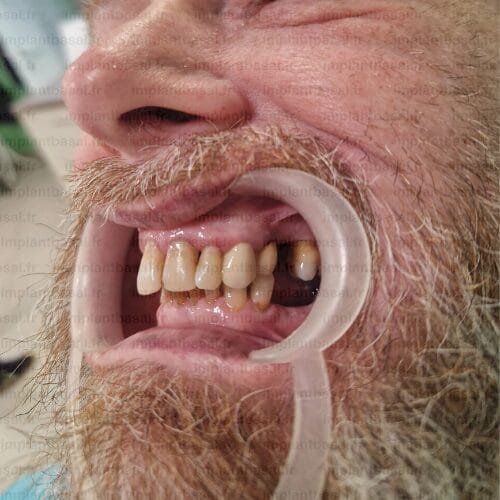
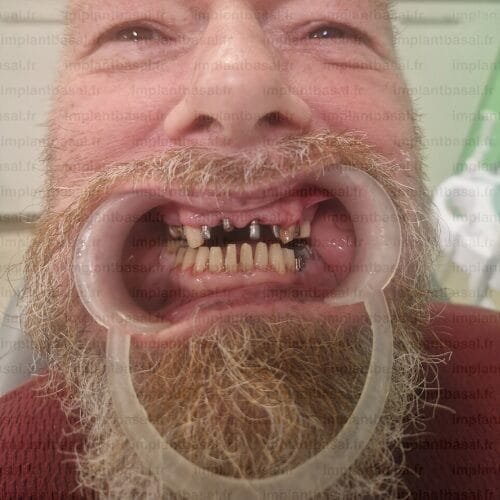
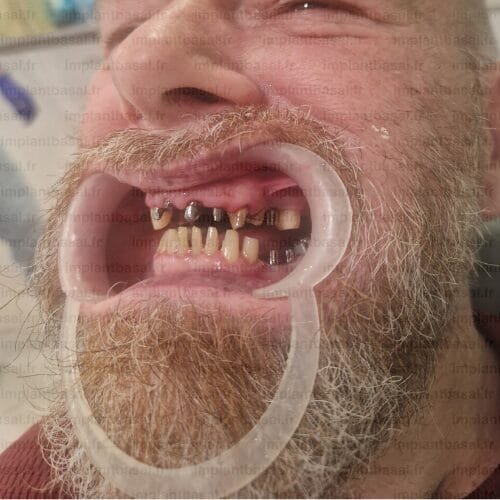
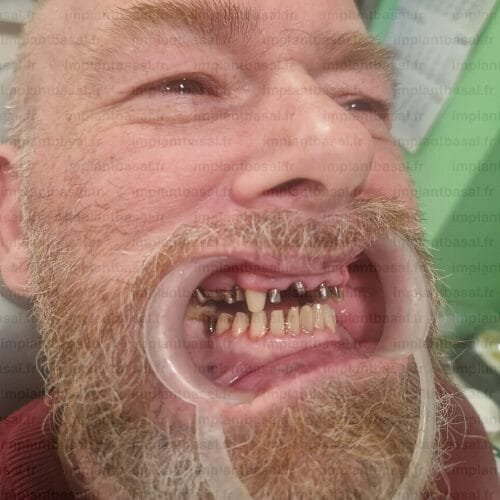
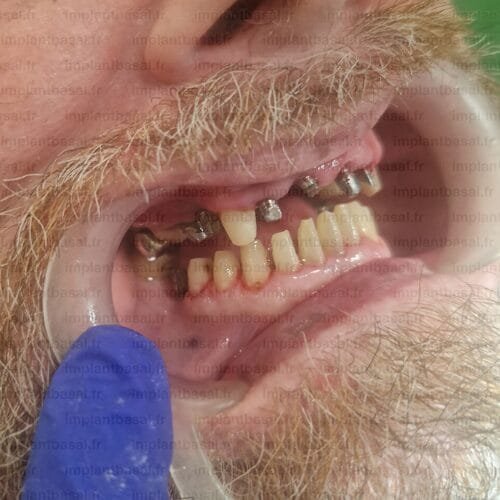
When Frederic arrived at the clinic, the clinical photographs and radiographic examination showed the consequences of advanced generalized periodontal disease.
The condition had affected the supporting tissues around his teeth and resulted in significant loss of supporting bone.
The remaining bone anatomy made conventional implant placement more challenging.
At this stage, the treatment plan had to take into account not only the missing and compromised teeth, but also the limited amount of available bone.
Treatment Planning and Basal Implant Placement
Following the clinical and radiographic assessment, the treatment options were discussed with Frederic.
Because of the degree of bone loss, basal implantology was selected as the approach for his rehabilitation.
An important part of the treatment philosophy was to preserve natural teeth that were still considered clinically viable.
In Frederic’s case, the implants were positioned according to the available anatomy and the planned prosthetic rehabilitation.
The clinical images below show the implant positioning during treatment.
Digital CAD/CAM Prosthetic Planning
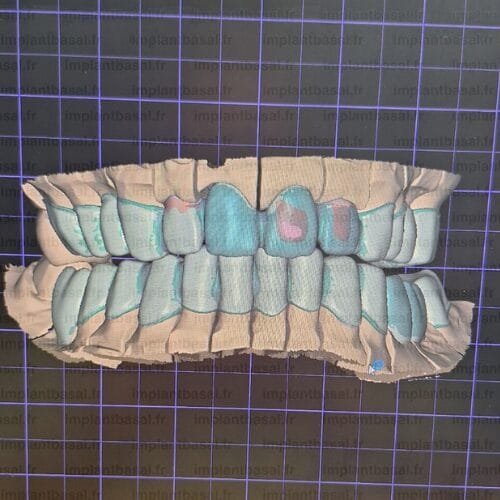
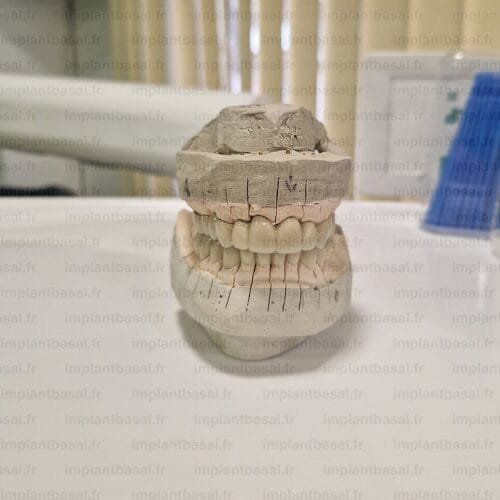
After implant placement, the prosthetic rehabilitation was designed using digital CAD/CAM technology.
The restoration was digitally planned in three dimensions to take into account Frederic’s facial characteristics, bite and functional requirements.
This digital workflow allowed the dental team to design a customized fixed prosthesis with precise adaptation.
The objective was to create fixed teeth with a natural appearance while maintaining appropriate function and occlusion.
Fixed Full-Mouth Rehabilitation
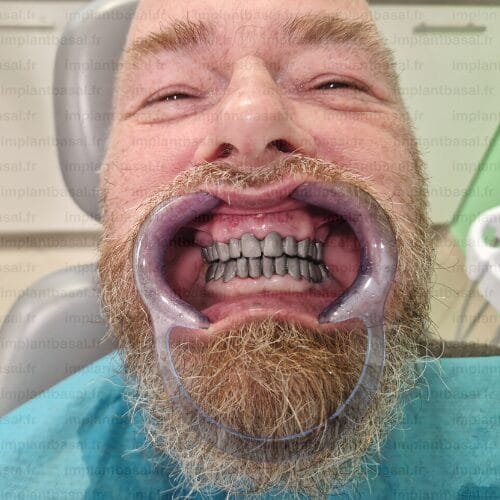
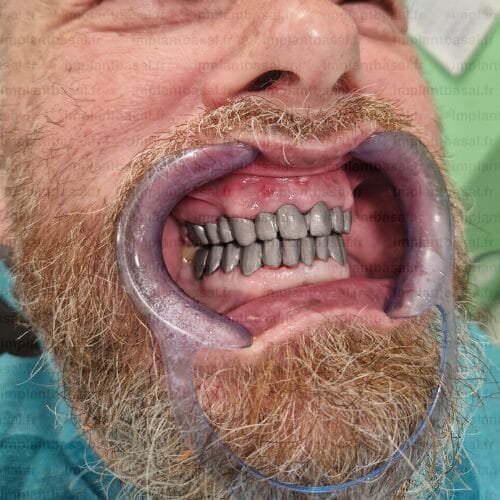
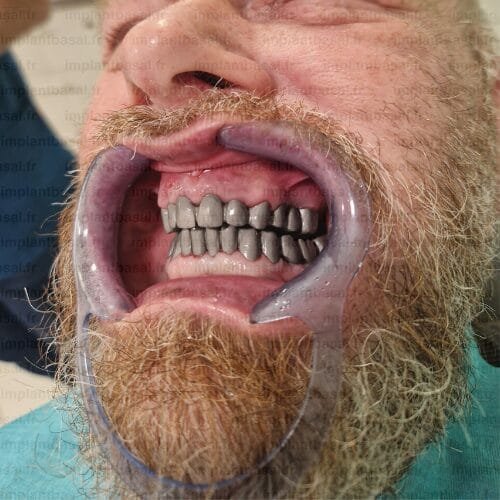
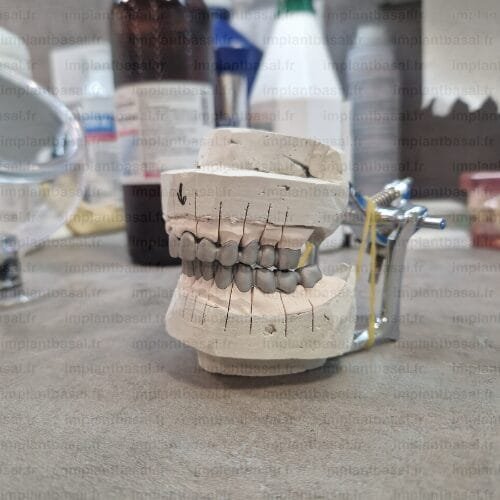
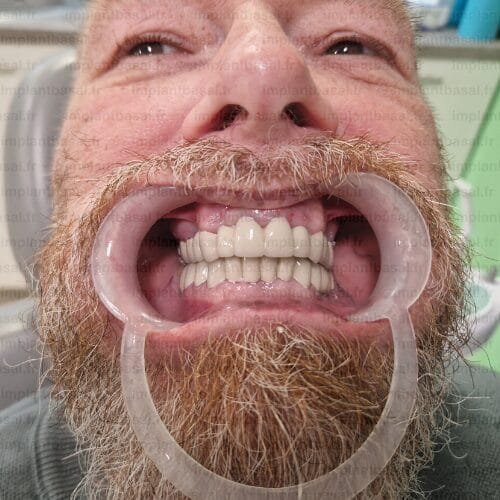
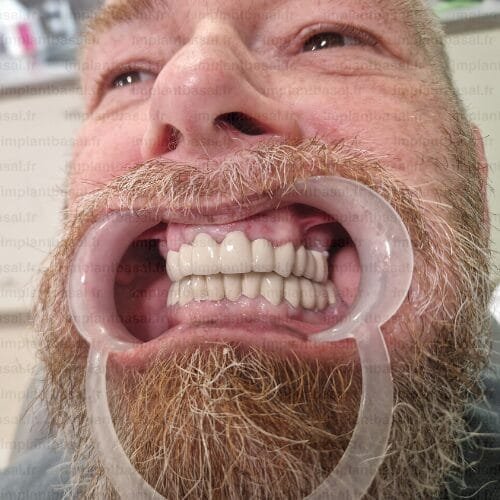
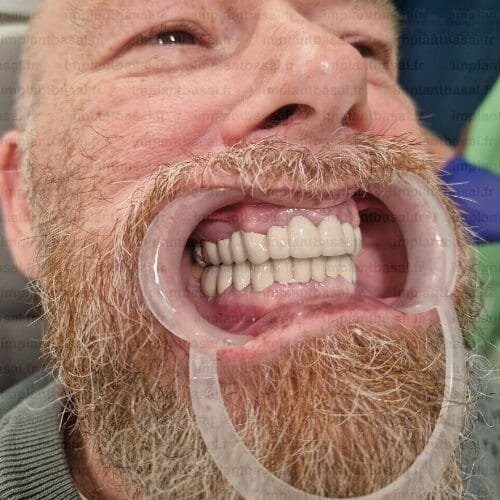
The treatment was completed with a fixed prosthetic rehabilitation for the upper and lower jaws few days after the basal implantation.
The restoration was made using a metal-ceramic structure, made in 3D by the CAD-CAM.
The treatment was completed within seven days in this particular case.
Treatment duration can vary significantly between patients depending on their clinical condition, treatment plan and prosthetic requirements.