Procedure
Basal Implant
Procedure
Basal Implant
The placement of a basal implant and its fixed prosthesis takes place over 1 week. Unlike traditional dental implants, this procedure requires only a single stage. The fixation of the prosthesis is immediate, allowing the patient to return home with fixed teeth and no false gums. To ensure the success of the treatment and prevent any complications, 7 essential phases must be followed. Here is the typical process for basal implant placement and prosthesis (bridge) fixation.
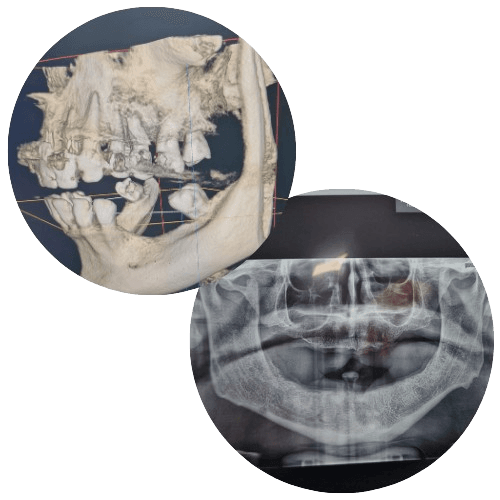
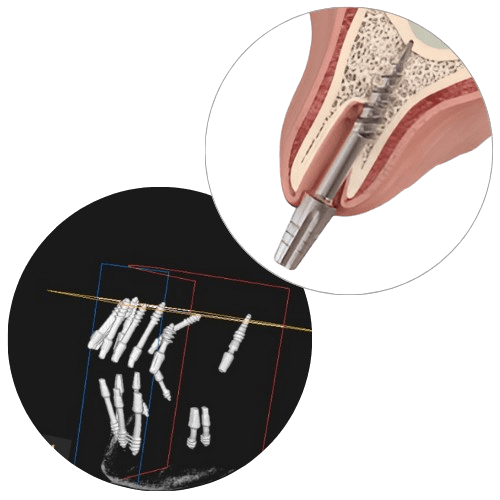
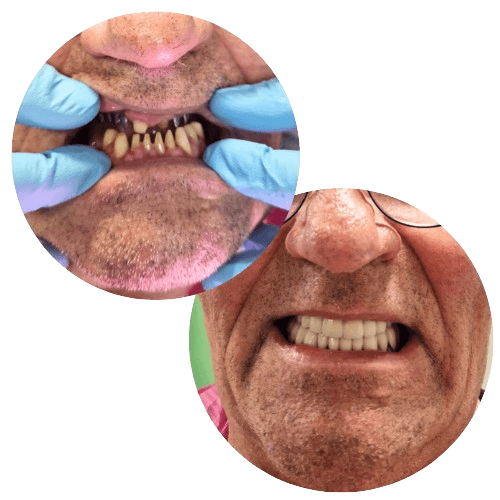
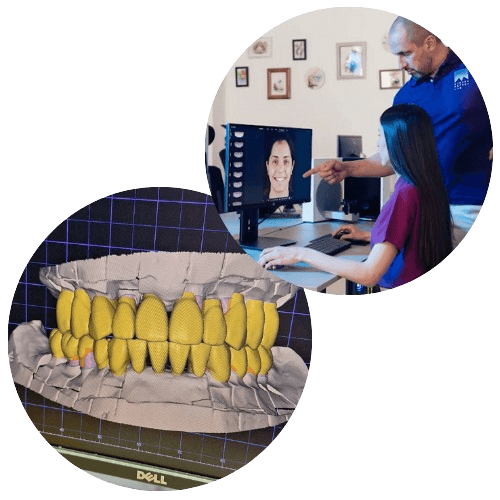
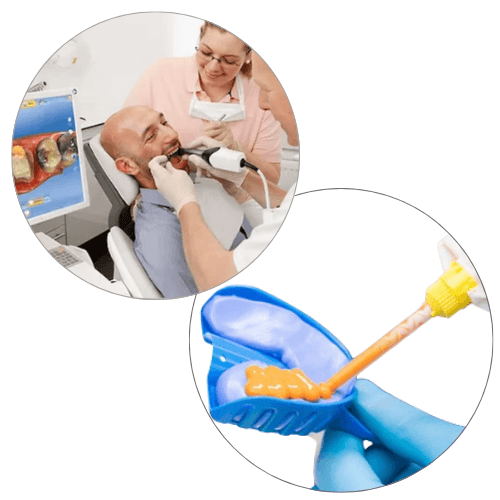
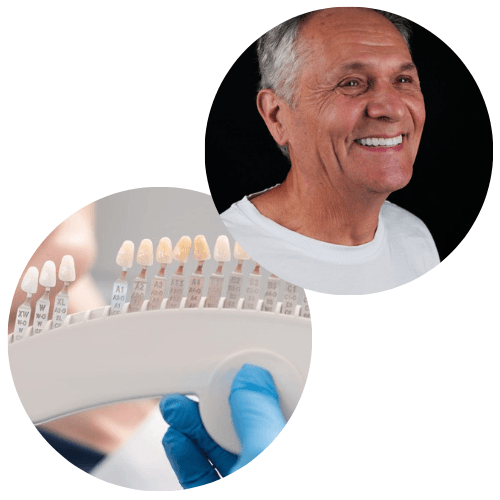
Once the color, shape, and size of the future teeth have been chosen, the patient moves on to the next step.
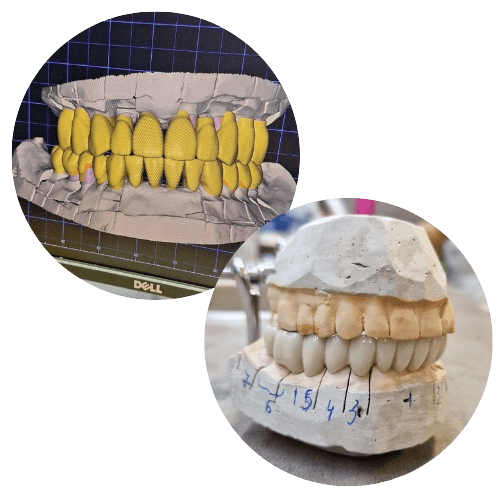
The day after the basal implants are placed, a trial fitting of the prostheses is performed. The dental technician and other technicians then adjust the shade, alignment, and position of the teeth according to the patient’s preferences, while maintaining facial balance, using 3D CAD/CAM technology.
The fabrication of the final bridge begins only after the patient’s approval and then requires an additional 48 hours.
FAQ
POPULAR QUESTIONS
Basal implantology is an advanced technology that requires significant infrastructure and specialized training for the entire medical team. While not all dentists are qualified to place basal implants, this technology offers the highest success rates for replacing all the teeth in the jaw for patients with limited jawbone.
Basal implants are designed for patients with significant bone loss and do not require bone grafting. They offer faster healing times and increased stability, even in complex bone situations.
To determine if you are a candidate for basal implants, our team of experts is available to answer all your questions and provide you with all the necessary information. We will guide you through the entire process, from developing a personalized treatment plan to providing a detailed quote. Basal implantology is an ideal solution for patients who require a full restoration of their teeth, offering exceptional stability and comfort. However, if you only wish to replace one or two teeth, we also offer other reliable and effective treatment options.
Yes, basal implants are specifically designed for use in cases of low bone density, offering a stable solution without bone grafting.
Yes, before or after appropriate treatment for periodontitis, basal implants can be placed to restore dental function.
The price of a basal implant varies depending on several factors, such as the location of the procedure, its complexity, and the type of basal implant. Generally, the price of a basal implant (Ihde Dental) ranges from €500 to €800.
The treatment usually lasts between 4 and 5 days, but we recommend that our patients allow 6 days to account for unforeseen circumstances and follow-up and adjustment visits.
Basal implants, when properly cared for and correctly placed, can last a lifetime. Good oral hygiene and regular dental checkups are essential.
Basal implants are made from a stable medical-grade titanium alloy, a neutral material with no risk of allergy.
Yes, it is possible and even recommended to place this type of dental implant immediately after tooth extraction. This allows the bone to regenerate around the implant and avoids a second trauma.
The number of implants required is determined after an assessment by our expert team.
The number of implants varies depending on the patient’s needs, but it is common to place between 6 and 8 implants per jaw for optimal stability.
This number is reviewed based on clinical findings.
The procedure is performed under local anesthesia to ensure optimal comfort. In some cases, conscious sedation or general anesthesia may be considered depending on the patient’s preferences and needs.
For dental implant care, we recommend using an ultrasonic toothbrush and a range of products specifically designed for basal dental implants.
We provide this type of toothbrush directly on-site for interested patients.
It is strongly recommended that you entrust the follow-up of your basal implant treatment to the practitioner who performed the initial treatment and placed the basal dental implants.
They are familiar with your oral health history and have access to your medical records.
However, you can also have your post-operative follow-up appointments at one of the dental clinics that perform basal implant procedures.
When a dentist tells you that you have no bone left, they are referring to the spongy part of the bone, which is the recipient site for a traditional implant.
A basal implant, or “immediate dental implant,” is placed in the cortical part of the bone. This part of the bone generally suffers very little atrophy, even after a long period of tooth loss.
It is the most mineralized part of the bone. Therefore, a dental implant can be placed even with significant bone loss when it is a basal implant.
As with any medical procedure, there is no such thing as zero risk. However, the BAx basal implant is much less risky than other implant systems. Post-operative corrections are possible, unlike with traditional implantology.
Yes, although smoking causes numerous problems for oral and general health, the success rate for smoking patients who have received basal implants is the same as for non-smoking patients. However, smoking is strongly contraindicated for patients with traditional dental implants.
Healing is generally rapid, with a shorter recovery period compared to traditional implants. Patients can often resume normal activities a few days after the procedure.
The content of this page has been validated by our specialist implantologists, trained by world leaders in the field such as Professor Ihde and Professor Eugenio Conte, to guarantee you reliable and accurate information. To learn more about the expertise and certifications of our practitioners (Dr. Vitalie, Kiril), please visit our Clinic & Team page.